Why AI Security Is Moving Toward Continuous Monitoring
A recent NIST publication argues that no finite set of AI safety rules can protect against all future attacks. As AI agents gain access to tools and enterprise systems, security is shifting from static guardrails toward continuous monitoring and adaptation.
Artificial intelligence security is entering a familiar phase.
For decades, cybersecurity practitioners learned that static defenses alone were insufficient. Signature-based antivirus evolved into IDS, EDR, and eventually continuous detection and response platforms. The underlying lesson was simple: attackers adapt faster than static rules.
A recent publication from the U.S. National Institute of Standards and Technology (NIST) suggests that AI security may be heading down the same path.
The report presents a mathematical argument supporting a transition from static protection mechanisms toward a model based on continuous monitoring and continuous updates. While the conclusion may sound intuitive to security professionals, its implications for AI systems—and especially AI agents—are significant.
The Assumption Behind Most AI Safety Systems
Many AI safety mechanisms today rely on a common assumption:
Given a sufficiently comprehensive set of rules, policies, filters, and guardrails, harmful behavior can be prevented.
This assumption appears throughout the industry in the form of:
- System prompts
- Content filters
- Safety policies
- Prompt injection defenses
- Guardrail frameworks
The objective is straightforward: define a boundary between acceptable and unacceptable behavior and prevent the model from crossing it.
However, real-world deployments increasingly reveal a different reality.
Every major frontier model release is followed by new jailbreak techniques, prompt injection strategies, and novel bypass methods. Defenders update protections, attackers adapt, and the cycle repeats.
The NIST publication argues that this pattern is not merely an implementation problem—it may be an unavoidable property of sufficiently complex AI systems.
Why Perfect Guardrails May Not Exist
The central insight from NIST is that no finite set of rules can anticipate every future attack strategy.
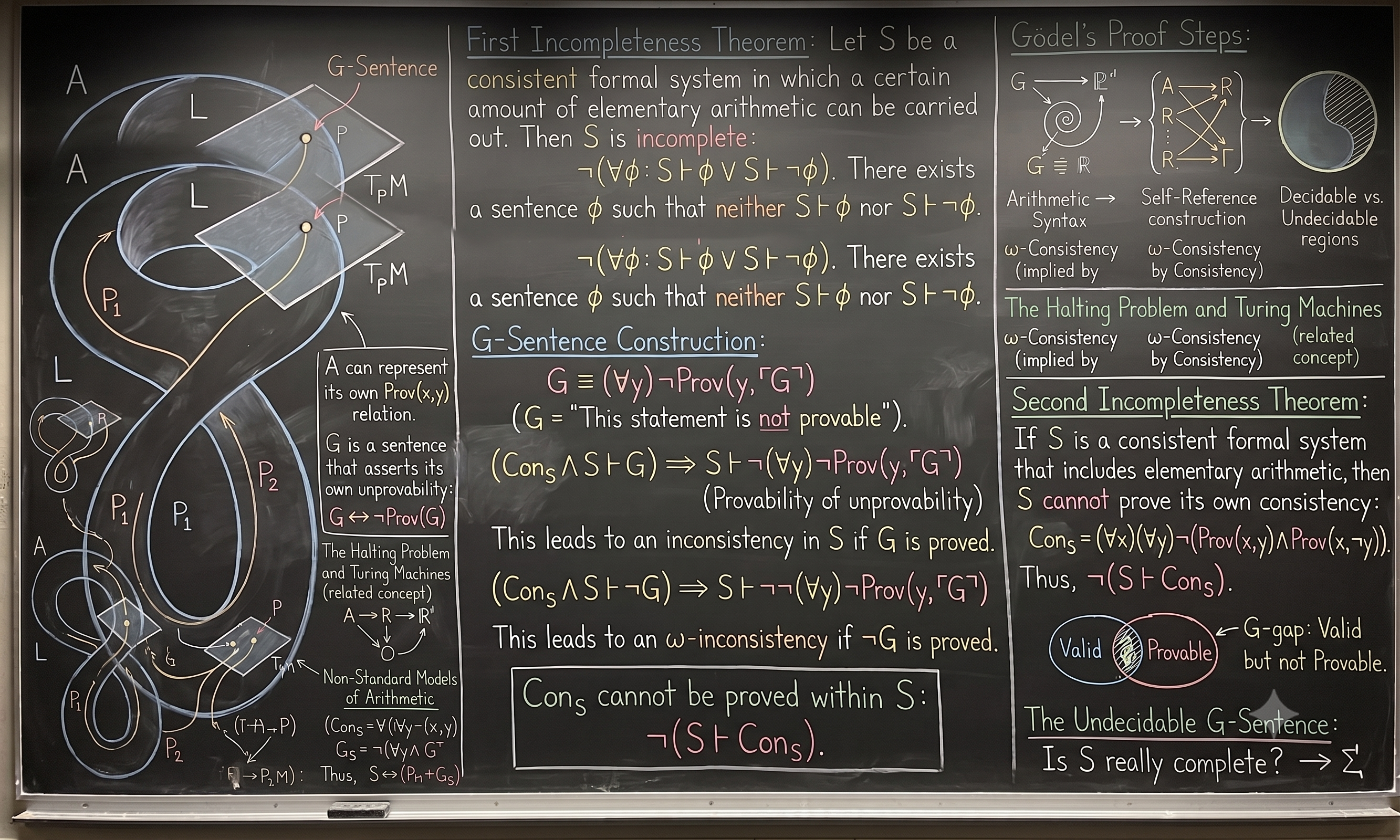
This echoes a much older result. Gödel's incompleteness theorems showed that any consistent formal system powerful enough to express basic arithmetic must contain true statements it cannot prove from within. There is no finite set of axioms that captures every truth. The NIST argument applies the same intuition to AI safety: a fixed rule set rich enough to govern a capable model can never be complete, because new valid attacks always exist outside its assumptions.
In practical terms, this means that any static safety mechanism is inherently incomplete. New prompts, interaction patterns, and attack chains can emerge outside the assumptions used during design.
For security practitioners, this idea is not particularly controversial.
The cybersecurity industry has already experienced similar transitions:
Generation 1: Signature-Based Protection
Known malware signatures were used to block known threats.
Generation 2: Rule-Based Prevention
Firewalls and policy engines attempted to define acceptable behavior.
Generation 3: Detection and Response
Organizations shifted toward monitoring systems capable of identifying unknown attacks in real time.
The industry eventually accepted a difficult truth:
Prevention remains important, but detection and adaptation are equally essential.
AI security appears to be reaching the same conclusion.
The Agent Era Changes the Threat Model
The challenge becomes more serious as organizations adopt AI agents.
Traditional large language models primarily generated text. Modern agents increasingly perform actions:
- Executing code
- Accessing databases
- Browsing websites
- Sending emails
- Creating tickets
- Interacting with enterprise applications
- Coordinating other agents
In this environment, prompt injection is no longer simply a content quality issue.
It becomes an operational security problem.
An injected instruction may influence tool usage, alter workflows, access sensitive information, or trigger unintended actions. The attack surface expands beyond model outputs into the broader ecosystem surrounding the model.
This shift introduces a new requirement:
Organizations must monitor not only what an AI system says, but also what it sees, reasons about, and attempts to do.
From Static AI Safety to Continuous AI Security
The resulting security model looks increasingly familiar to cybersecurity professionals.
Rather than relying exclusively on fixed rules, organizations are beginning to adopt approaches built around continuous observation and adaptation.
Continuous Monitoring
Monitor agent behavior, tool usage, system interactions, and policy violations in real time.
Continuous Red Teaming
Continuously discover new attack techniques rather than relying solely on pre-deployment testing.
Continuous Updates
Rapidly incorporate newly discovered attack patterns into security controls and governance policies.
Operational Resilience
Assume that some attacks will succeed and focus on rapid detection, containment, and recovery.
This model acknowledges that security is not a state to achieve but a process to maintain.
Rethinking How We Measure AI Security
The implications extend beyond defense architecture.
Many current AI security evaluations focus on static metrics:
- Jailbreak success rates
- Prompt injection success rates
- Safety benchmark scores
- Policy compliance rates
These measurements remain valuable, but they capture only a snapshot in time.
As AI systems become increasingly dynamic, new metrics may become equally important:
- How quickly can a system detect a novel attack?
- How rapidly can defenses be updated?
- How effectively can an agent recover from compromise?
- How resilient is the overall workflow under adversarial conditions?
The industry may gradually shift from evaluating security as a fixed property toward evaluating security as an adaptive capability.
The Road Ahead
The most important takeaway from the NIST publication is not that guardrails are ineffective.
Guardrails remain necessary.
The point is that a fixed set of guardrails alone are unlikely to be sufficient.
As AI systems evolve into autonomous agents operating across enterprise environments, security strategies will need to evolve alongside them. Static protections will remain a foundational layer, but continuous monitoring, continuous validation, and continuous adaptation are becoming increasingly important components of a mature AI security program.
Cybersecurity made this transition years ago.
AI security may now be beginning the same journey.
Further Reading
- NIST: Mathematical Proof Supports Transition to Continuous Monitor and Update Security Model for AI Systems
- MITRE ATLAS Framework
- OWASP Top 10 for LLM Applications